Save $10 On Your First Install. Use Code BLOG10
-min.webp)

Auxe is operating as an essential business
Save $10 On Your First Install. Use Code BLOG10
Learn how to achieve a clean, secure, and comfortable TV wall-mount setup in Toronto. This guide covers important considerations such as wall types, high-rise and condo requirements, proper TV placement, and safe installation planning for a professional-looking entertainment space.
By
Auxe
|
August 20, 2026


.png)

.jpg)
.png)
Learn how to achieve a clean, secure, and comfortable TV wall-mount setup in Toronto. This guide covers important considerations such as wall types, high-rise and condo requirements, proper TV placement, and safe installation planning for a professional-looking entertainment space.
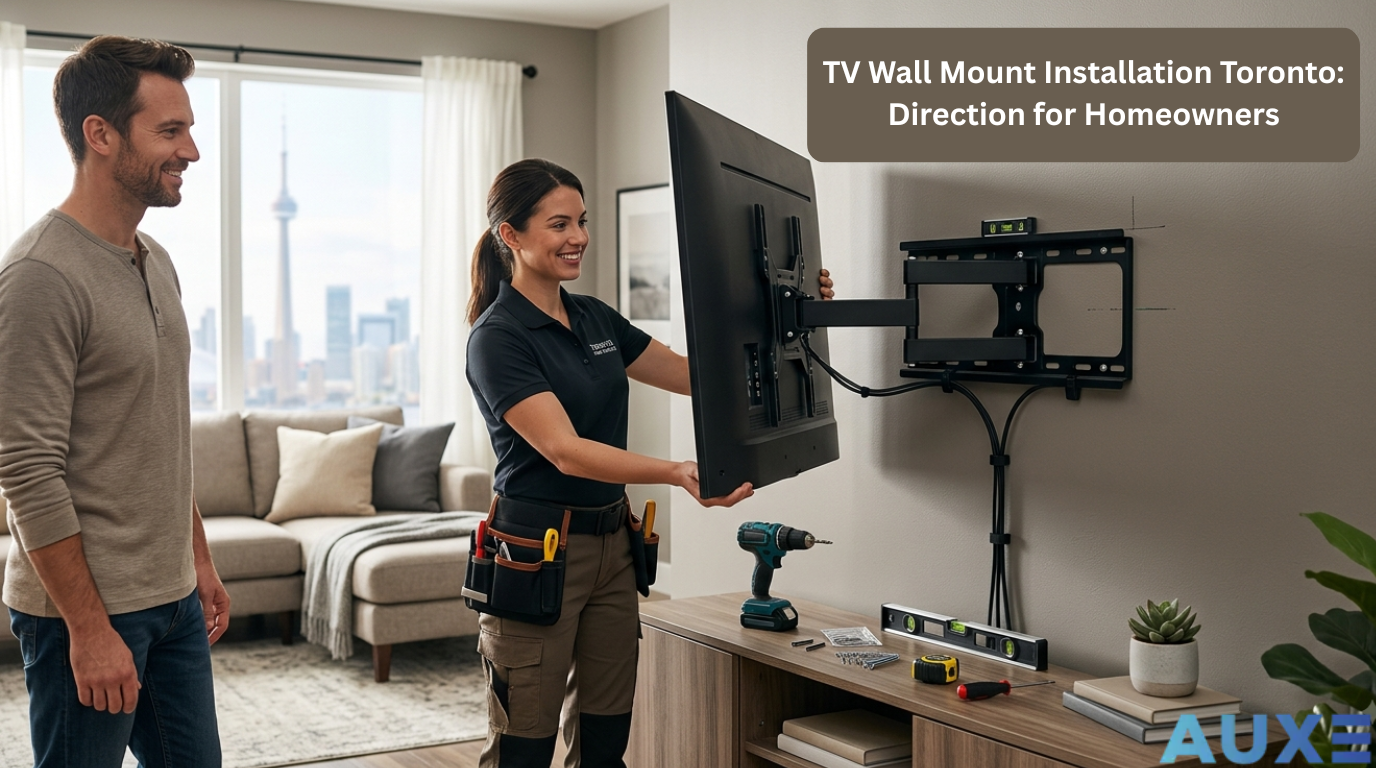
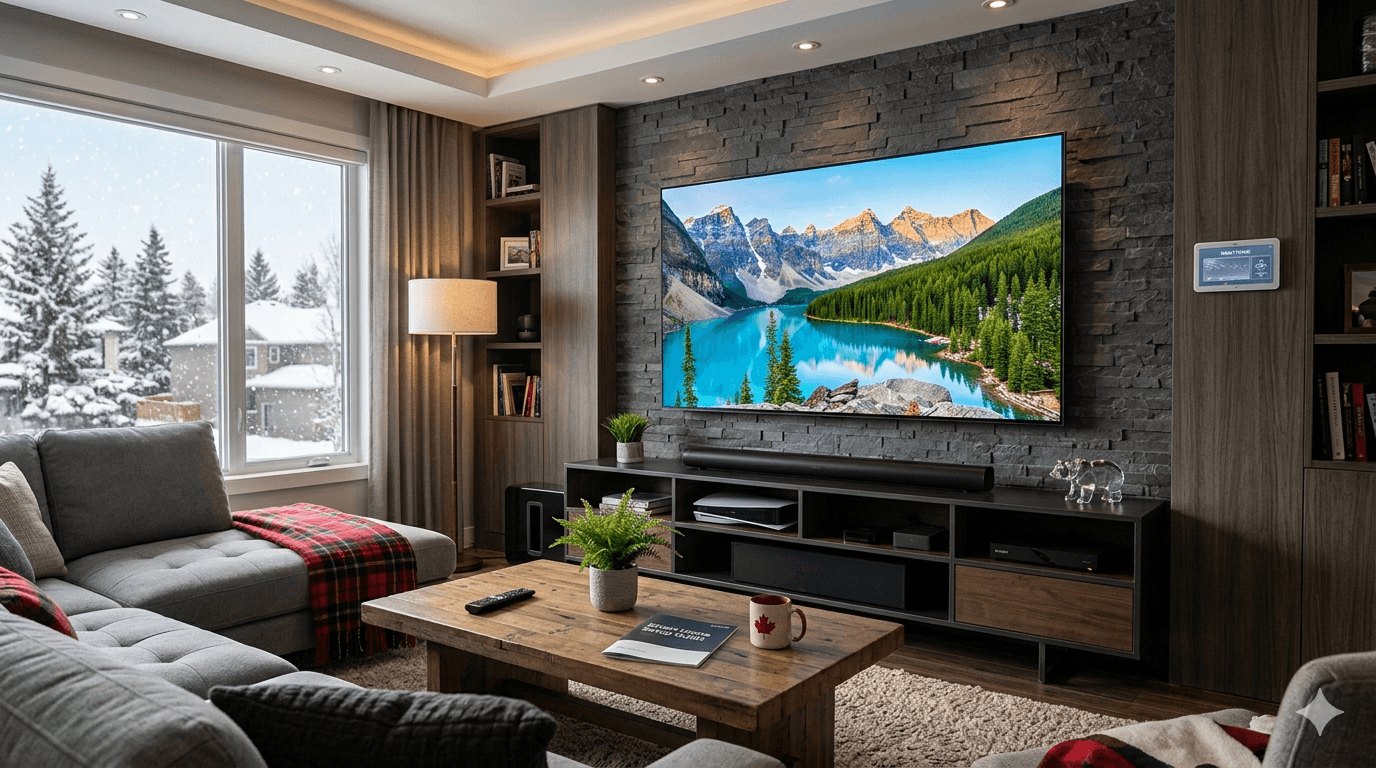
Upgrading your living space with a modern flat-screen TV transforms your home entertainment experience. However, achieving a clean, secure, and ergonomically correct setup requires proper planning—especially given the unique architecture, plaster walls, concrete high-rises, and condo rules found across Toronto homes. Whether you are mounting a 55-inch OLED in a Liberty Village condo or an 85-inch display above a fireplace in a Leaside detached house, this comprehensive guide covers everything you need to know about TV installation in Toronto.
TV Wall Mount Installation Toronto
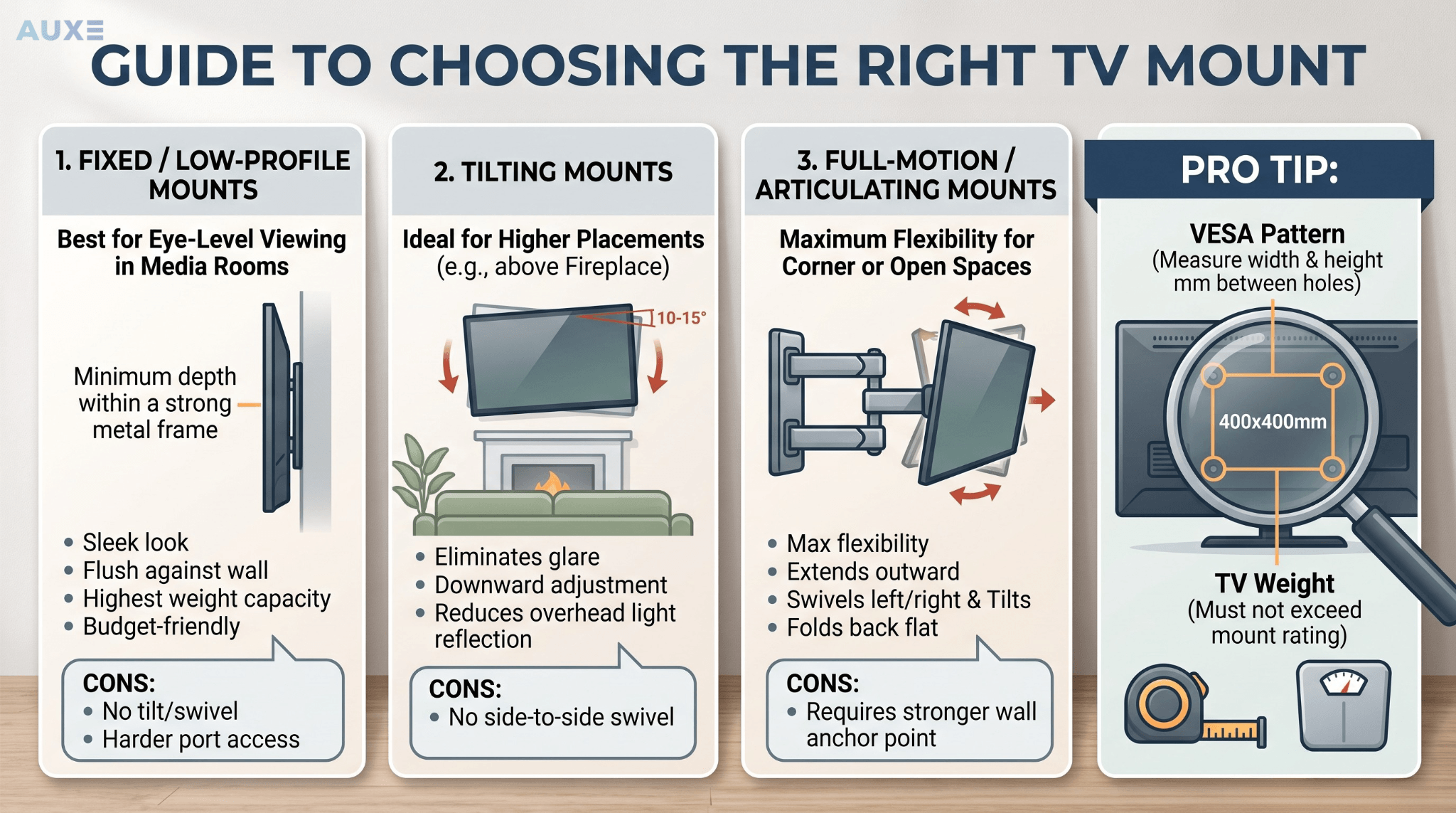
Selecting the correct mount depends on your room layout, light sources, and functional requirements. Installing the wrong bracket can limit screen adjustability or compromise structural support.
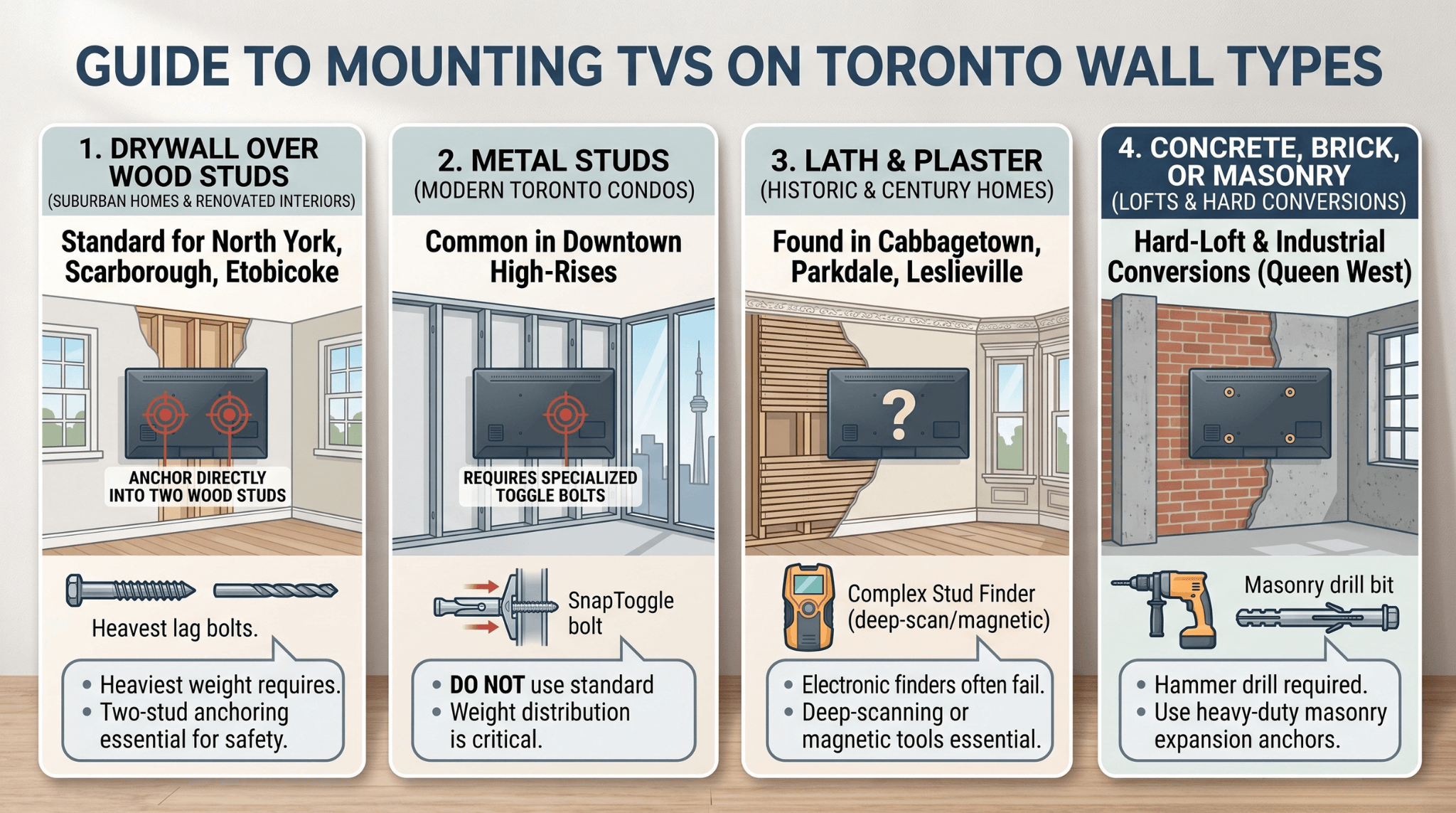
Toronto’s housing inventory is diverse, ranging from classic century homes in the Annex to modern high-rises along the waterfront. Wall structural composition dictates the anchoring system required for a safe mount.
Standard framing in Toronoto uses 2x4 or 2x6 wooden studs spaced 16 or 24 inches apart on center. Heavy TVs should always be anchored directly into at least two wood studs using heavy-duty lag bolts.
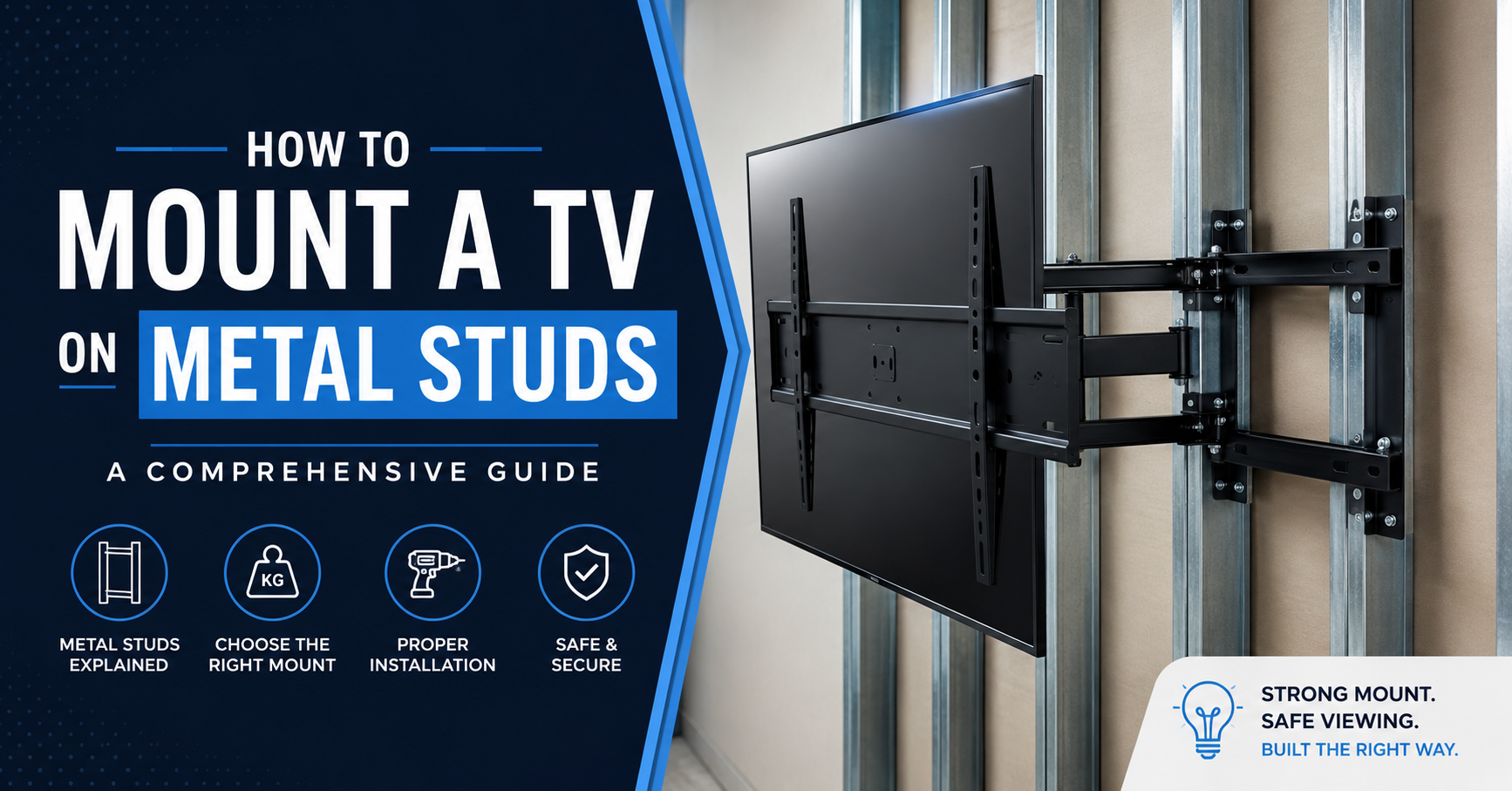
Most high-rise condominiums in downtown Toronto utilize lightweight steel stud framing. Standard wood screws or basic drywall plugs will fail under weight. Installing a TV on metal studs requires specialized toggle bolts (e.g., SnapToggles) designed to expand behind the metal channel and distribute weight safely.
Common in older neighborhoods like Cabbagetown, Parkdale, and Leslieville, plaster walls are thick, brittle, and unpredictable. Deep wood studs sit behind layers of plaster and wood lath. Standard electronic stud finders often give false readings here; deep-scanning stud finders or magnetic search tools are essential to locate true structural framing without cracking the plaster finish.
Hard-loft conversions in Queen West or industrial basements feature exposed concrete or brick walls. Mounting here requires a hammer drill, masonry drill bits, and heavy-duty masonry expansion sleeve anchors.
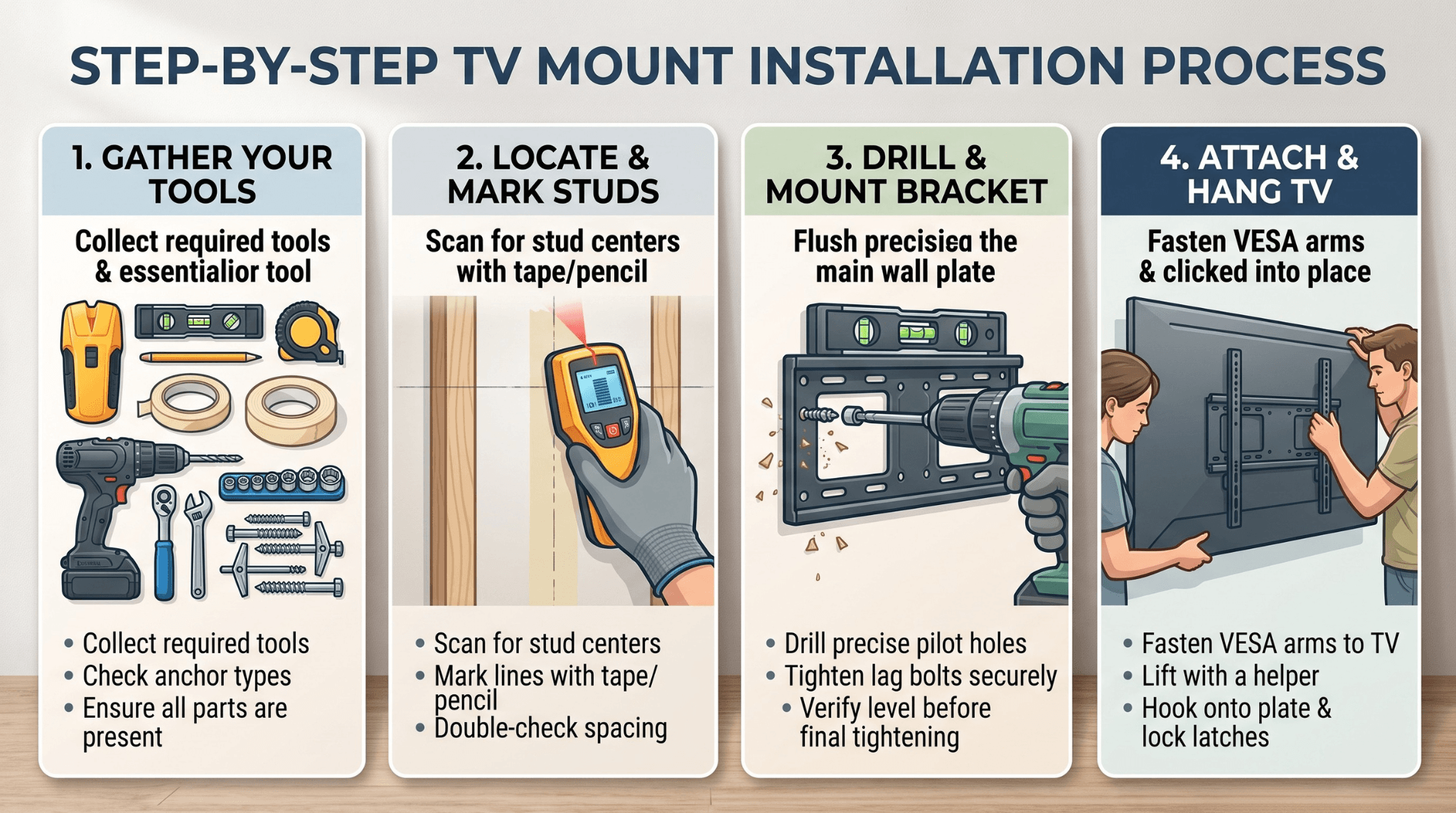
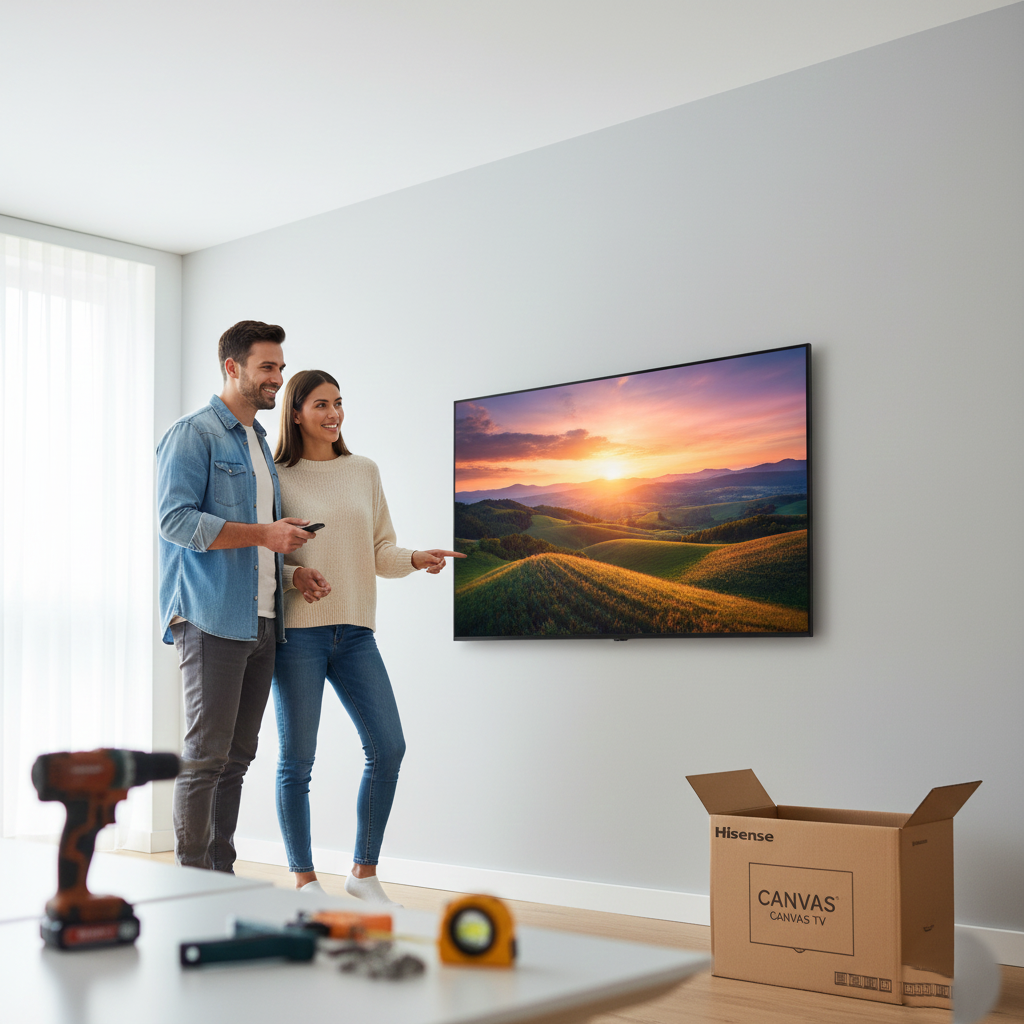
Proper installation requires precision, the right tools, and careful execution.
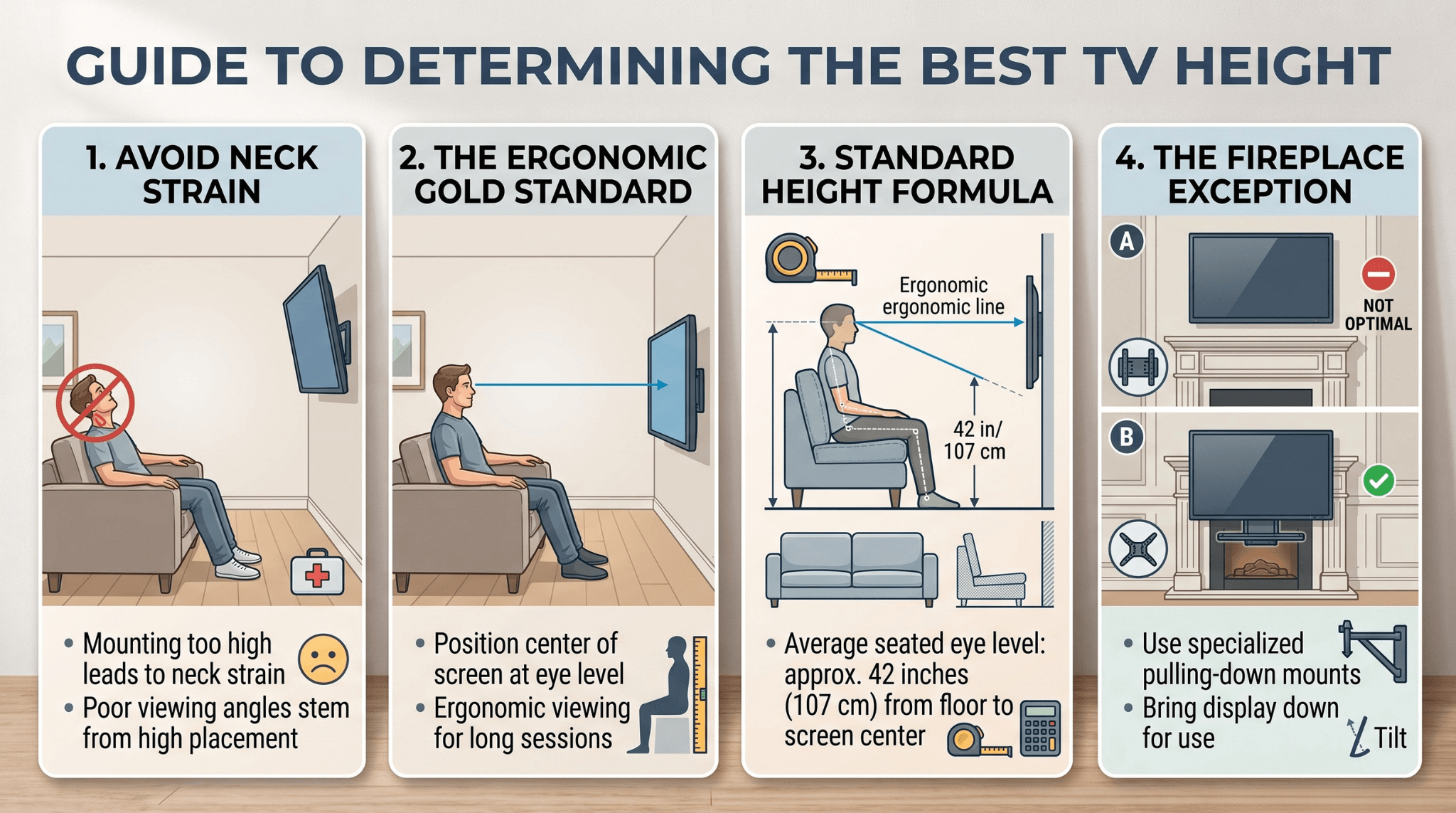
Neck strain and poor viewing angles stem from mounting a TV too high. The gold standard for ergonomic viewing is positioning the center of the screen at eye level from your seated position.
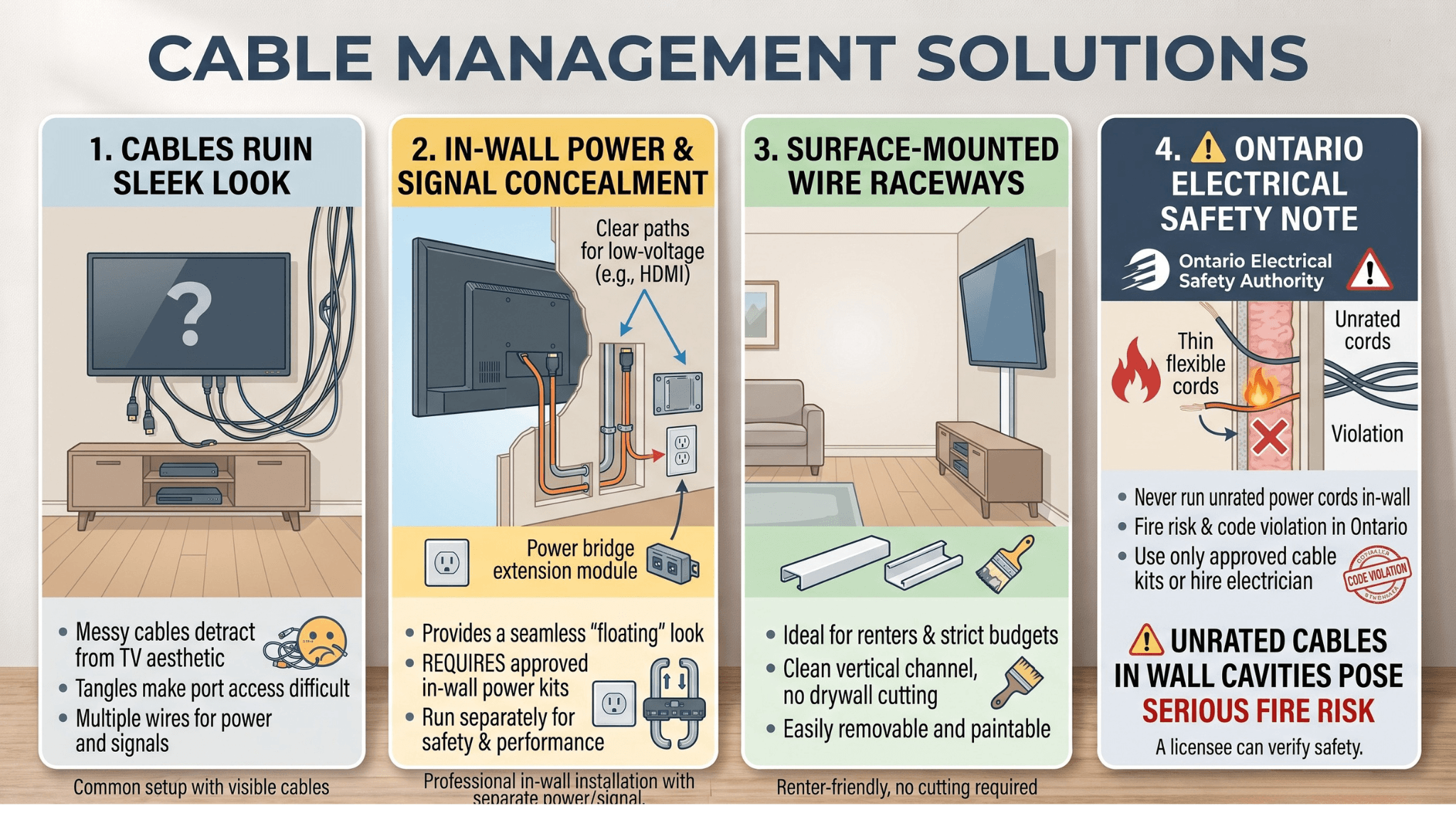
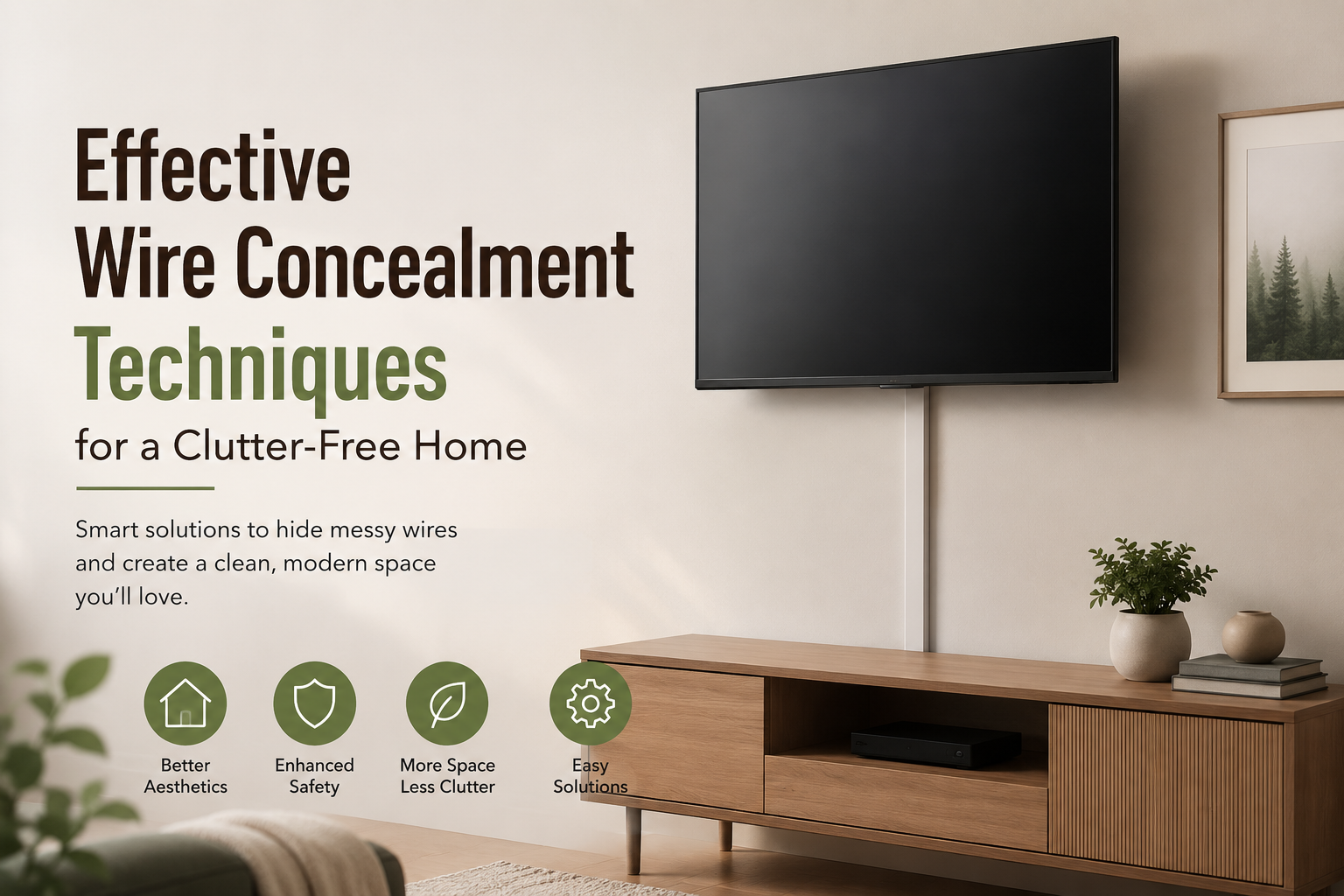
Dangling HDMI cables, power cords, and media box wires ruin an otherwise sleek wall setup. Toronto homeowners have two primary options for wire concealment:
Running cables inside the wall cavity provides a seamless floating look. However, building codes in Ontario strictly prohibit running high-voltage TV power cords directly through drywall. Instead, install an in-wall bridge kit / power extension module (or hire a licensed electrician to install a recessed outlet directly behind the screen) combined with low-voltage pass-through plates for HDMI and optical lines.
If you rent a condo or apartment in Toronto and cannot cut into drywall, paintable PVC wire raceways attach neatly to the wall surface, grouping wires into a clean vertical channel painted to match your wall tone.
⚠️ Ontario Electrical Safety Note: Never run standard flexible appliance cords or TV power cables behind drywall without an approved in-wall electrical power kit. Unrated cables inside wall cavities pose a serious fire risk and violate local
building codes.
Frequently Asked Questions (FAQs)
A: Yes! While metal studs are thinner than wood studs, using heavy-duty SnapToggle or toggle bolts distributes the weight safely. A single pair of quality toggle bolts in metal studs can easily support modern flat screens up to 85 inches.
Q: How much does professional TV wall mount installation cost in Toronto?
A: In Toronto and the GTA, professional installation typically ranges from $100 to $250 for basic mounting onto drywall or wood studs. Rates can vary if wire concealment inside walls, masonry/concrete drilling, or complex full-motion brackets are required.
Q: Can you hide wires in a rental apartment wall in Toronto?
A: Most lease agreements prohibit cutting large holes in drywall. In rentals, high-quality surface-mounted paintable cable raceways offer a slick, non-damaging solution that conceals cords along the wall surface.
Q: Is it safe to mount a TV above a working fireplace?
A: Yes, provided you verify that heat buildup above the mantel does not exceed your TV's maximum operating temperature (typically 40°C / 104°F). Using a mantel deflector shield and a tilt mount helps maintain screen safety and comfortable viewing.


.webp)
Our online price calculator is free and requires no credit card, email, or contact information. Check it out!
Our online price calculator is free and requires no credit card, email, or contact information. Check it out!

.png)
.png)
.png)
.png)
.png)
.png)
.png)
.png)
.png)
.png)
.png)
.png)
%20(1).png)
%20(1).png)
%20(1).png)
.png)


.webp)


.webp)
%20(1).webp)