Save $10 On Your First Install. Use Code BLOG10
-min.webp)

Auxe is operating as an essential business
Save $10 On Your First Install. Use Code BLOG10
Security issues don't cease after dark. In fact, many break-ins, thefts, trespassing occurrences and suspicious activities occur at night due to the lack of visibility and fewer people around. That is why night vision CCTV cameras are no longer just an extra feature. For many homes, offices, warehouses, parking lots, retail stores, and commercial properties, they are a basic security requirement.
By
Auxe
|
July 15, 2026


.png)

.jpg)
.png)
Security issues don't cease after dark. In fact, many break-ins, thefts, trespassing occurrences and suspicious activities occur at night due to the lack of visibility and fewer people around. That is why night vision CCTV cameras are no longer just an extra feature. For many homes, offices, warehouses, parking lots, retail stores, and commercial properties, they are a basic security requirement.

Security issues don't cease after dark. In fact, many break-ins, thefts, trespassing occurrences and suspicious activities occur at night due to the lack of visibility and fewer people around. That is why night vision CCTV cameras are no longer just an extra feature. For many homes, offices, warehouses, parking lots, retail stores, and commercial properties, they are a basic security requirement.
But buying a night vision CCTV camera is not as simple as picking the camera with the highest resolution or the longest night vision range. Many people make that mistake. They buy a camera that looks powerful on paper, but the footage is blurry, faces are unclear, license plates are unreadable, or the camera performs poorly in Canadian weather.
This guide explains what you need to know before buying night vision CCTV cameras, how they work, which features matter, and how to choose the right system for your property.
A night vision CCTV camera is a security camera designed to capture video in low-light or dark conditions. It helps you monitor areas such as driveways, entrances, backyards, warehouses, loading docks, parking lots, hallways, and business premises after sunset.
Most night vision cameras use infrared light, also called IR. Infrared light is outside the visible light range, so humans usually cannot see it, but a CCTV camera sensor can detect it and use it to create a visible image. This is why many IR night vision cameras produce black-and-white footage at night. Axis explains that near-infrared light is commonly used in network video lighting, and cameras often switch to black-and-white mode at night because colour information is no longer reliable under IR illumination.
Some modern cameras also offer colour night vision. These cameras use highly sensitive sensors, built-in white lights, or nearby ambient lighting to capture colour footage in low-light conditions. Colour can be useful because it helps identify important details like clothing, vehicles, objects, and surroundings.

A CCTV camera that performs well during the day but fails at night is only doing half the job. If your property needs 24/7 protection, night performance matters as much as daytime clarity.
Good night vision helps you see movement clearly, identify people, review incidents, monitor blind spots, and collect useful evidence. Poor night footage, on the other hand, creates a false sense of security. You may have a camera installed, but if the video is too dark, overexposed, grainy, or blurred, it may not help when you actually need it.
This is especially important for businesses. A retail store, office, construction site, warehouse, restaurant, or apartment building needs reliable footage outside business hours. For homeowners, night vision cameras can help monitor the driveway, garage, front door, backyard, and side entrances.
Not all night vision cameras work the same way. Before buying one, you should understand the main types.

Infrared night vision cameras are the most common option. They use built-in IR LEDs to illuminate the area in front of the camera. Since infrared light is not normally visible to humans, the camera can record in darkness without using a bright visible light.
The footage is usually black and white. This is not a weakness by itself. In total darkness, black-and-white IR footage is often more reliable than colour footage. The real issue is image quality. A good IR camera should show faces, movement, and objects clearly without washing out the image.
Infrared cameras are a smart choice for alleys, backyards, warehouses, garages, loading areas, and places where you do not want visible lights turning on all night.
Colour night vision cameras are designed to keep more detail in the image at night. They may use a larger image sensor, a wider aperture, smart image processing, or built-in warm lights to capture colour footage. The benefit is obvious: colour gives more context. For example, knowing that a person wore a red jacket or drove a white van can be more useful than black-and-white footage. Axis notes that colour can be critical for identifying a person, object, or vehicle in surveillance situations.
However, colour night vision is not magic. It usually needs some light. That light may come from streetlights, porch lights, parking lot lights, or built-in camera lights. If the area is completely dark and the camera detects no visible light, it may still switch to black-and-white IR mode.
Unlike most cameras, which have a fairly low light sensitivity, starlight cameras are built for extremely low light. They have more light available than normal cameras due to the use of light sensitive sensors. In low light conditions, such as street, parking lot, commercial yard, or building entrance, these cameras can deliver a higher-quality image.
They come in handy when you'd like to capture natural-looking shots without the use of overly intense spotlights. A few high-end low-light cameras can shoot color photos in really low light, but that is all contingent on the camera's model, lens, sensor, and lighting. The low-light camera technology, Axis says, can capture colour even in the darkest conditions, almost where the human eye cannot see colour.
Thermal cameras detect heat instead of visible light. They are not the same as normal night vision cameras. They can detect people, animals, or vehicles in total darkness, smoke, fog, or difficult weather conditions.
However, thermal cameras usually do not show normal facial details, clothing colours, or license plates. They are better for detection than identification. They are commonly used in industrial sites, large perimeters, farms, remote properties, and high-security locations.
For most homes and small businesses, a regular IR or colour night vision CCTV camera is enough. Thermal cameras are more specialized and usually more expensive.

Night vision range tells you how far the camera can see in darkness. You may see cameras advertised with 30 feet, 60 feet, 100 feet, or even longer IR range. Do not trust the number blindly. The advertised range is often based on ideal conditions. Real performance depends on the camera quality, lens angle, surface reflection, lighting, weather, and installation height. A camera with a long IR range but poor image processing can still produce bad footage. For a small front porch, you may not need a long range. For a parking lot, warehouse yard, or commercial entrance, you need stronger IR coverage and better lens planning.
Resolution matters, but it is not everything. A 4K camera can still perform badly at night if the sensor is weak or the lighting is poor. At the same time, a good 2MP or 4MP camera with strong low-light performance can be more useful than a cheap 8MP camera with noisy night footage. For general home use, 2MP to 4MP can be enough for entrances, driveways, and indoor areas. For businesses, parking areas, cash counters, loading zones, and wider spaces, 4MP to 8MP may be better. The goal is not just a bigger number. The goal is usable detail.
A wide-angle lens covers more area, but objects appear smaller. A narrow lens covers less area, but gives more detail at a distance. This is where many people make a bad choice. They install one wide-angle camera and expect it to identify everything. That usually does not work. If you want to identify faces at a doorway, place a camera near the doorway. If you want to monitor a large parking lot, use multiple cameras or a camera with the right lens. For serious security, camera placement matters more than marketing claims.
A good day/night CCTV camera usually has an IR cut filter. During the day, the filter helps block infrared light so colours look accurate. At night, the filter moves away so the camera can use infrared light. This feature improves both daytime and nighttime performance. Without proper day/night switching, footage can look washed out, inaccurate, or unclear.
Smart IR helps prevent overexposure when a person or object comes close to the camera at night. Without Smart IR, faces can appear too bright and details can disappear. For example, if someone walks close to a basic IR camera, the IR light may reflect strongly from the face and turn it into a white blur. Smart IR adjusts the infrared intensity to keep details more visible. This is an important feature for entrances, gates, front doors, hallways, and narrow walkways.
If the camera will be installed outdoors, weather resistance is not optional. You need a camera that can handle rain, snow, dust, humidity, and temperature changes. Look for an IP rating. IP ratings describe protection against solids and liquids. For outdoor CCTV cameras, IP65, IP66, or IP67 is usually preferred depending on exposure. IP ratings are standardized measurements, not just marketing words. For Canadian weather, also check the operating temperature. A camera may be weatherproof but still not suitable for very cold winters if its temperature rating is too limited.
For public areas, building entrances, commercial properties, parking lots, and apartment buildings, vandal resistance matters. Dome cameras with an IK rating are often used in places where tampering is possible. IK ratings measure impact resistance. Higher IK ratings mean the camera housing can handle stronger physical. If the camera is within reach, do not ignore vandal resistance.impact. IK10 is commonly considered a strong vandal-resistant rating for CCTV camera housings.
Wireless cameras are popular because they are easy to install. But easy does not always mean better. Wireless cameras depend on Wi-Fi signal strength, battery life, and network stability. They can be fine for small homes, apartments, or temporary monitoring. However, they may not be ideal for larger properties, commercial buildings, or critical security areas. Wired IP cameras, especially PoE cameras, are usually more reliable. PoE stands for Power over Ethernet. It allows one Ethernet cable to carry both power and data to the camera. Axis describes PoE as a setup where one cable can provide power, video, audio, and data, reducing the need for a separate power outlet near the camera.
For professional CCTV installation, PoE is often the better choice. It gives stable video, cleaner installation, and fewer connection problems.

Your camera is only useful if the footage is stored properly. There are several storage options. An NVR, or Network Video Recorder, is used with IP cameras. It stores footage from multiple cameras and is common in modern CCTV systems.
A DVR, or Digital Video Recorder, is used with older analog camera systems. Some properties still use DVR systems, but IP-based NVR systems are more flexible for modern installations. Some cameras support microSD cards. This can be useful for backup storage, but it is not ideal as the only storage method for serious security. Cloud storage is convenient because footage can be accessed remotely and may be safer if the recorder is stolen. However, it usually comes with monthly fees and depends on internet access.
Do not buy a camera only because it claims a long night vision distance. Instead, match the range to the area.
For a front door, 20 to 30 feet may be enough. For a driveway, 50 to 80 feet may be useful. For a parking lot or commercial yard, you may need 100 feet or more, but you may also need multiple cameras.
The wider the area, the harder it is for one camera to capture useful detail. A camera may “see” across a parking lot, but that does not mean it can identify a face or plate at that distance.
This is the honest rule: detection, recognition, and identification are not the same thing.
Detection means you can see that something is there. Recognition means you can tell what it is. Identification means you can clearly confirm who or what it is. For security, identification is what usually matters most.
Camera placement can make or break your system. Even an expensive camera will fail if it is installed in the wrong position.
Good locations include front doors, back doors, garage entrances, driveways, side gates, reception areas, cash counters, warehouse doors, loading docks, parking lots, stairways, hallways, and blind spots.
Avoid pointing cameras directly at bright lights, reflective glass, shiny metal, or surfaces that cause glare. Also avoid installing cameras too high. A camera mounted too high may show the top of a person’s head but not the face.
For outdoor cameras, keep the lens clean and protected from heavy rain runoff, spider webs, and direct snow buildup. Small maintenance issues can seriously affect night footage.
One common mistake is buying based only on megapixels. Higher resolution helps, but it does not guarantee better night footage.
Another mistake is expecting one camera to cover everything. A single wide camera may give you a general view, but it may not capture useful details.
A third mistake is ignoring lighting. Even night vision cameras perform better when the lighting environment is planned correctly. Sometimes adding a small motion light or improving exterior lighting gives better results than upgrading the camera.
Another mistake is choosing wireless cameras for areas where reliability matters. If the camera protects your business entrance, inventory, parking lot, or cash area, weak Wi-Fi is not acceptable.
Finally, many people forget about privacy rules. In Canada, businesses using video surveillance should provide clear notice before people enter areas where cameras may capture them. The Office of the Privacy Commissioner of Canada says signs should be clear, understandable, and include a contact for questions or access requests.
For homes, the best setup usually includes cameras at the front door, driveway, garage, backyard, and side entrance. A doorbell camera can help with visitors and deliveries, but it should not be the only camera if you want full coverage.
Homeowners should look for good IR night vision, motion detection, mobile app access, weather resistance, and enough storage. If the home has weak Wi-Fi, wired cameras are a better option.
For detached homes, PoE cameras are often worth considering because they are more stable and require less maintenance than battery-powered cameras.
Businesses need a more serious approach. A small store, restaurant, office, warehouse, clinic, or commercial unit has different risks than a home.
Business cameras should cover entrances, exits, cash areas, storage rooms, customer-facing areas, parking lots, and employee-only zones where appropriate. The system should also support reliable recording, remote access, user permissions, and enough storage.
For businesses, image quality at night is important because incidents often happen after closing. Poor footage can make it difficult to identify suspects, confirm events, or support an insurance claim.
A professional CCTV installer can help choose the right camera type, lens, placement, recorder, and storage setup.
Dome cameras are compact and harder to tamper with. They are good for indoor areas, entrances, apartment buildings, and commercial spaces. However, the dome cover can sometimes create glare or reflection if it gets dirty or if IR light reflects inside the dome.
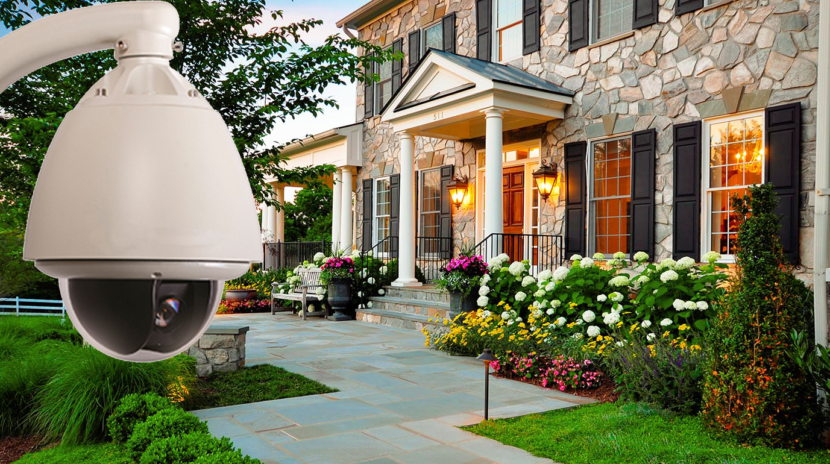
Bullet cameras are more visible and usually easier to aim. They are good for outdoor walls, driveways, parking lots, and long viewing areas. Their visible design can also act as a deterrent.
Turret cameras are a strong middle option. They are easy to adjust, usually have fewer IR reflection issues than dome cameras, and work well for both homes and businesses.
There is no single best shape. The right choice depends on the location and purpose.
Before buying a night vision CCTV camera, ask these questions:
Does the camera need to work in total darkness or only low light?
Do you need black-and-white IR footage or colour night vision?
How far does the camera need to see at night?
Do you need to identify faces, license plates, or just detect movement?
Will the camera be installed indoors or outdoors?
Is the camera weatherproof enough for Canadian conditions?
Is vandal resistance needed?
Will the system use Wi-Fi, PoE, NVR, cloud storage, or SD card storage?
How many days of footage do you need to keep?
Will the camera placement respect privacy rules?
If you cannot answer these questions clearly, do not rush the purchase. Guessing usually leads to poor coverage and wasted money.
Night vision CCTV cameras are one of the most important parts of a reliable security system. But the best camera is not always the most expensive one or the one with the biggest specs. The best camera is the one that fits your property, lighting conditions, security goals, and installation environment.
For homes, a good night vision system can help protect entrances, vehicles, deliveries, and outdoor spaces. For businesses, it can support safety, loss prevention, incident review, and after-hours monitoring.
If you are planning a CCTV installation, focus on real performance, not just marketing claims. Check the night vision type, image quality, lens, weather rating, storage, wiring, and placement. A well-planned system will always outperform a random collection of cameras.
At Auxe, we help homeowners and businesses choose smart, reliable security solutions that match their actual needs. Whether you need CCTV cameras for a home, office, store, warehouse, or commercial property, the right night vision setup can make your security system far more effective day and night.


.webp)
Our online price calculator is free and requires no credit card, email, or contact information. Check it out!
Our online price calculator is free and requires no credit card, email, or contact information. Check it out!

%20(1).png)
.png)
.png)
.png)
.png)
.png)
.png)
.png)
.png)
.png)
.png)
.png)
.png)
%20(1).png)
%20(1).png)
%20(1).png)
.png)



.webp)


.webp)
%20(1).webp)