Save $10 On Your First Install. Use Code BLOG10


Auxe is operating as an essential business
Save $10 On Your First Install. Use Code BLOG10
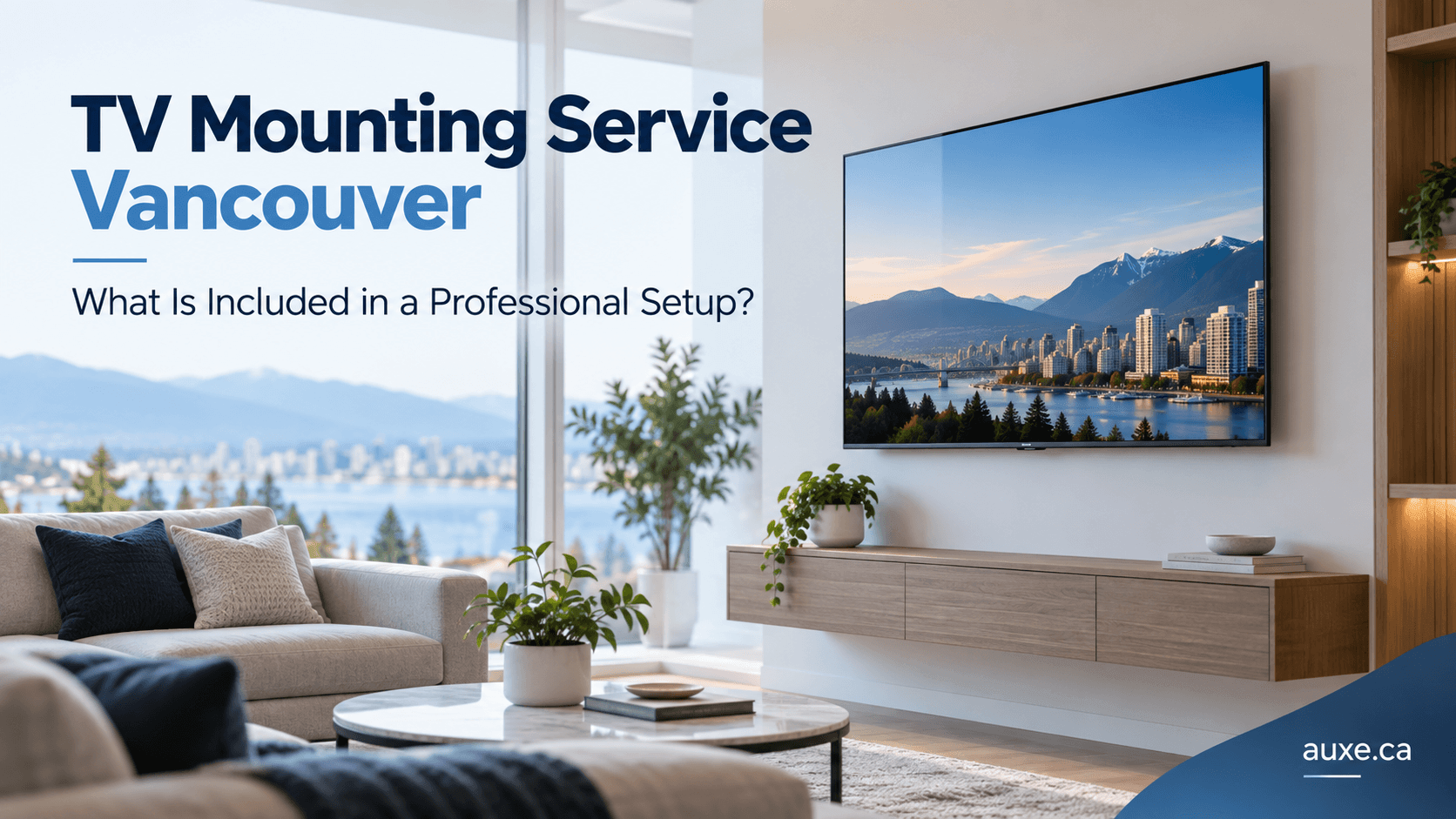
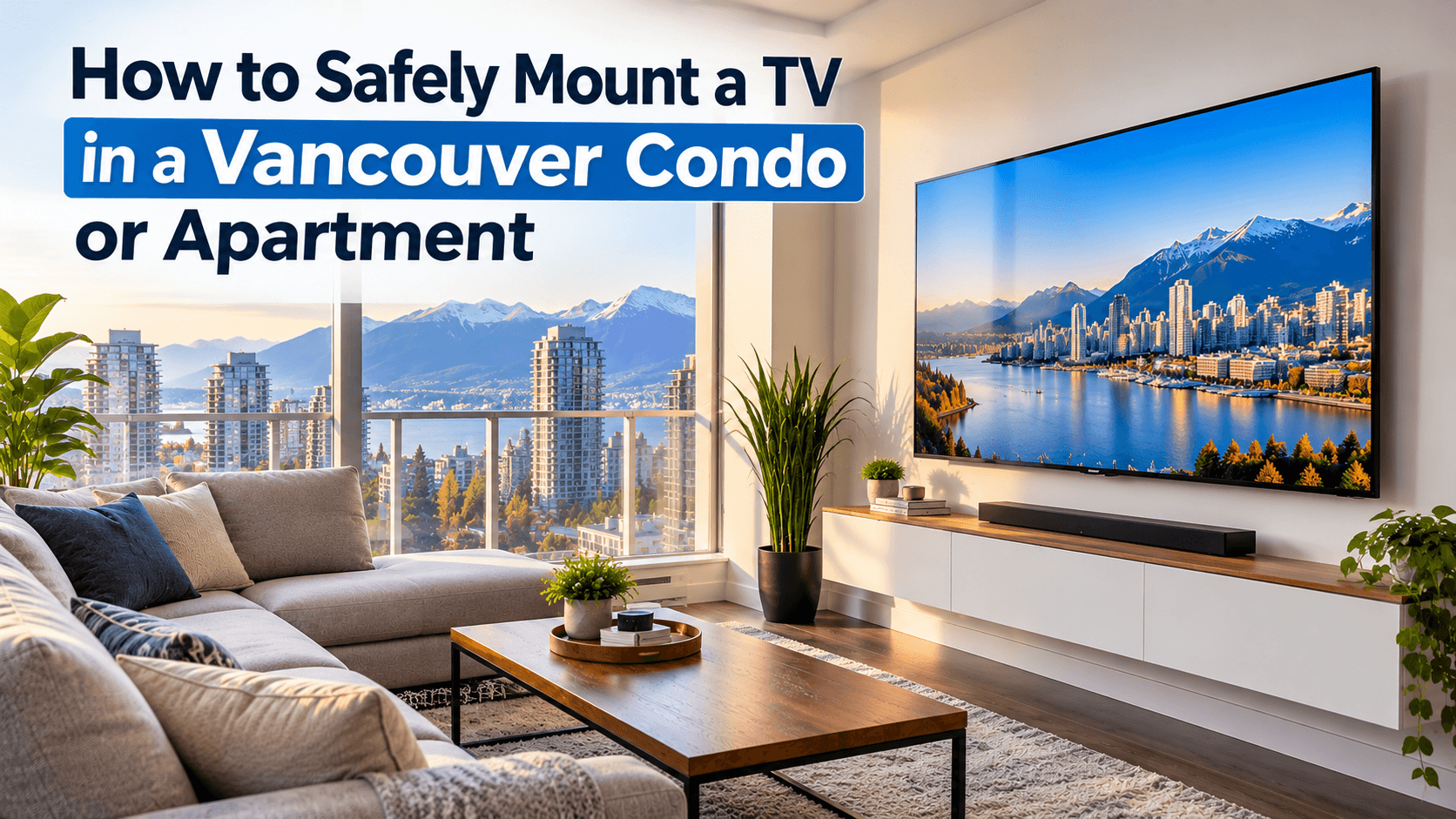
Mounting a TV on the wall is a great way to save space and create a clean, modern look in a condo or apartment. It keeps your TV off tables, improves viewing comfort, and gives your living room a more organized appearance. However, mounting a TV in a Vancouver condo can be different from installing one in a detached house.
By
Ali
|
October 28, 2026


Mounting a TV on the wall is a great way to save space and create a clean, modern look in a condo or apartment. It keeps your TV off tables, improves viewing comfort, and gives your living room a more organized appearance. However, mounting a TV in a Vancouver condo can be different from installing one in a detached house.
Mounting a TV on the wall is a great way to save space and create a clean, modern look in a condo or apartment. It keeps your TV off tables, improves viewing comfort, and gives your living room a more organized appearance. However, mounting a TV in a Vancouver condo can be different from installing one in a detached house.
Many modern Vancouver towers use steel studs, concrete walls, floor-to-ceiling windows, and shared building structures. These features can make TV installation more challenging. Before drilling any holes, it is important to understand your wall type, choose the right mount, and check the rules that apply to your building.
Professional TV wall mount installation Vancouver services can help you find the right mounting location and secure your TV safely. With proper planning, you can enjoy a neat setup without unnecessary wall damage or installation problems.
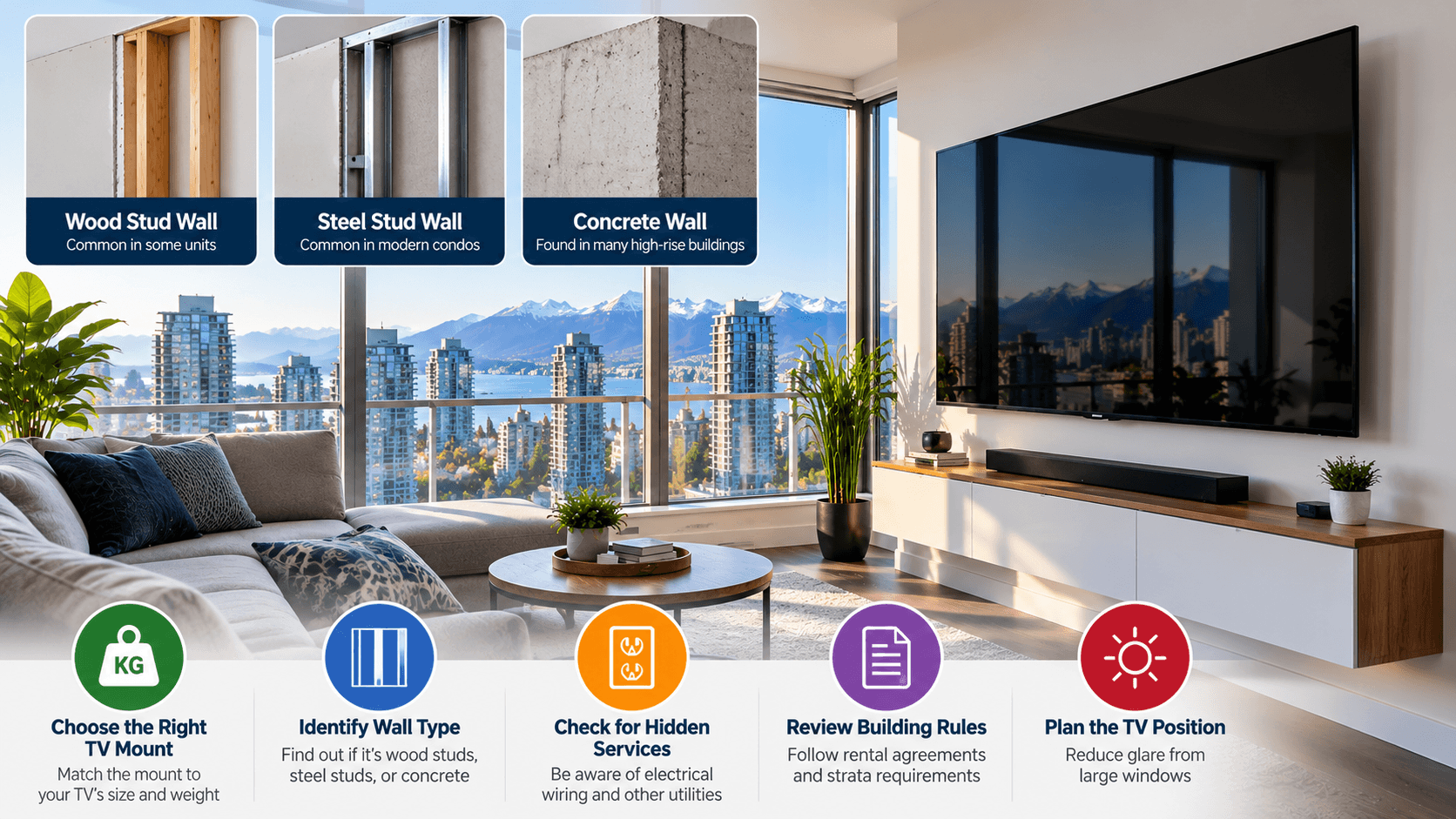
Vancouver condos and apartments come in many shapes and sizes. Some units have drywall partitions, while others include concrete walls or steel stud framing. Each wall type needs a different mounting approach.
A mounting method that works well in a traditional wood-frame house may not be suitable for a high-rise apartment. Using the wrong anchors, screws, or mounting points can lead to a loose bracket or wall damage.
There are also practical concerns, such as limited living space, nearby electrical outlets, glare from large windows, and building rules about drilling.
Before starting your TV mounting Vancouver project, consider these important factors:
Taking these steps before installation can help you avoid common mistakes and enjoy your TV setup with greater confidence.
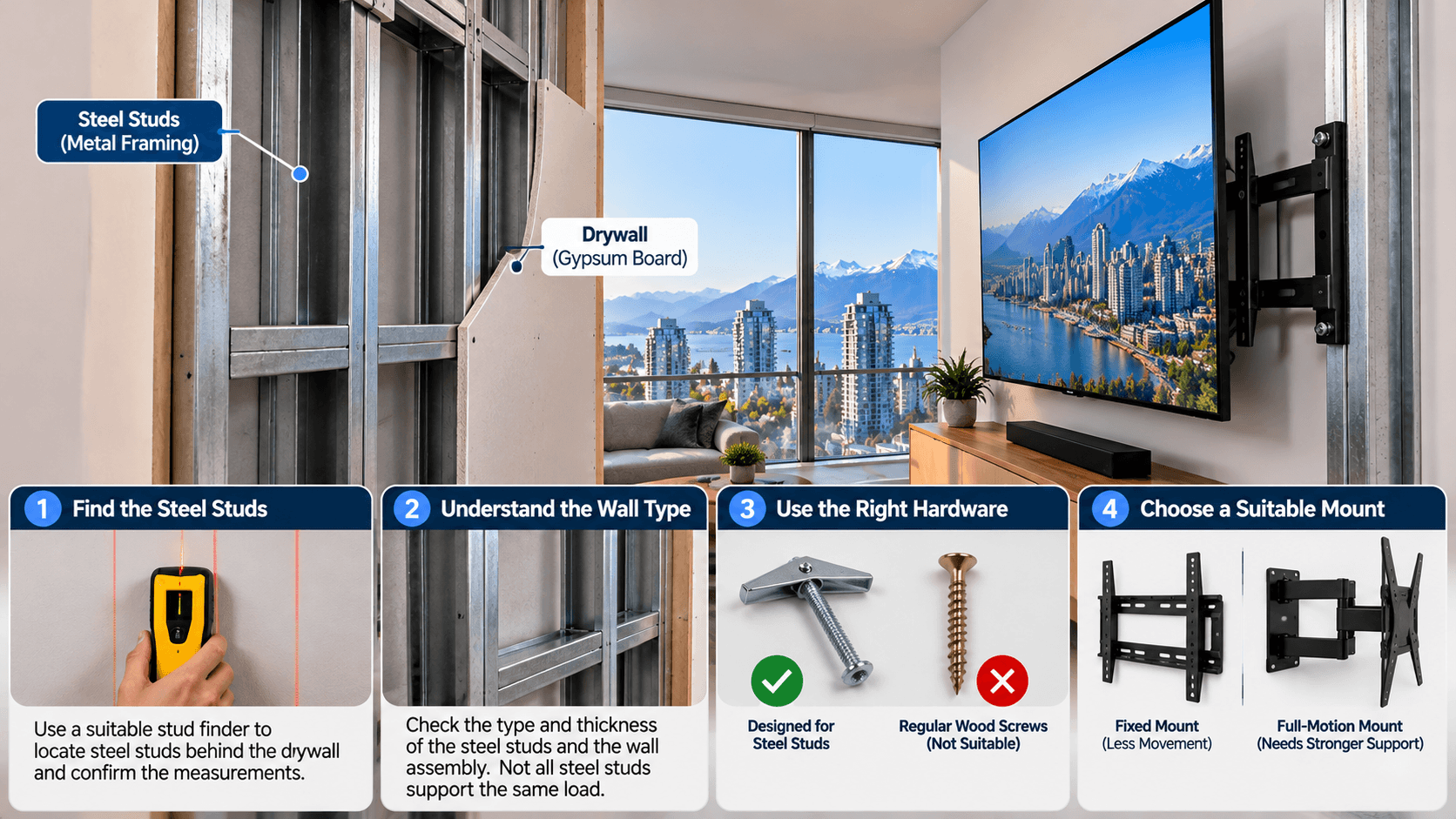
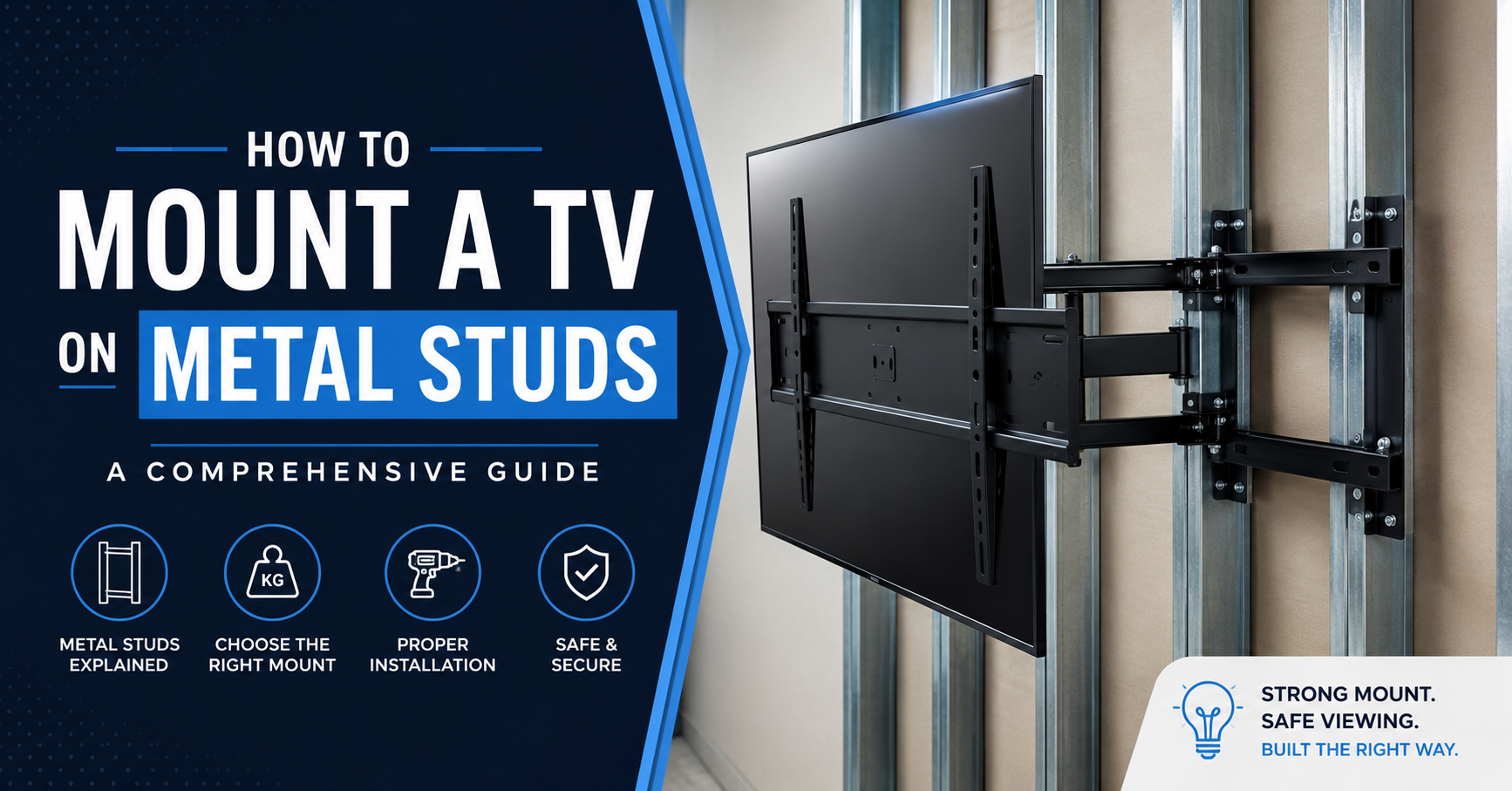
Steel studs are common in many modern residential buildings. Unlike wood studs, they are made of metal and may have thinner sections that require specific mounting hardware and techniques.
This is one reason metal stud TV mounting Vancouver projects need careful planning. Standard wood screws should not be used as a substitute for the correct fasteners designed for steel stud construction.
The first step is to locate the studs behind the drywall. A suitable stud finder can help identify their positions, although readings should be confirmed before drilling.
You should also determine the type and thickness of the steel studs, as well as the wall assembly behind the drywall. Not every steel stud is designed to support the same load.
For heavier TVs, a professional installer may recommend a mounting system designed for steel studs, a suitable backing plate, or another approved support method. The right choice depends on the building's construction and the TV's weight.
Steel stud walls require mounting hardware that is compatible with the specific wall structure. The mount must transfer the TV's weight safely to the supporting structure rather than relying only on the drywall.
Full-motion mounts need particular attention because pulling the TV away from the wall creates additional leverage. This can place more stress on the mounting points than a fixed bracket.
If you are unsure about the wall construction, avoid guessing or drilling multiple test holes. A professional TV installation Vancouver service can assess the wall and select an appropriate mounting solution.
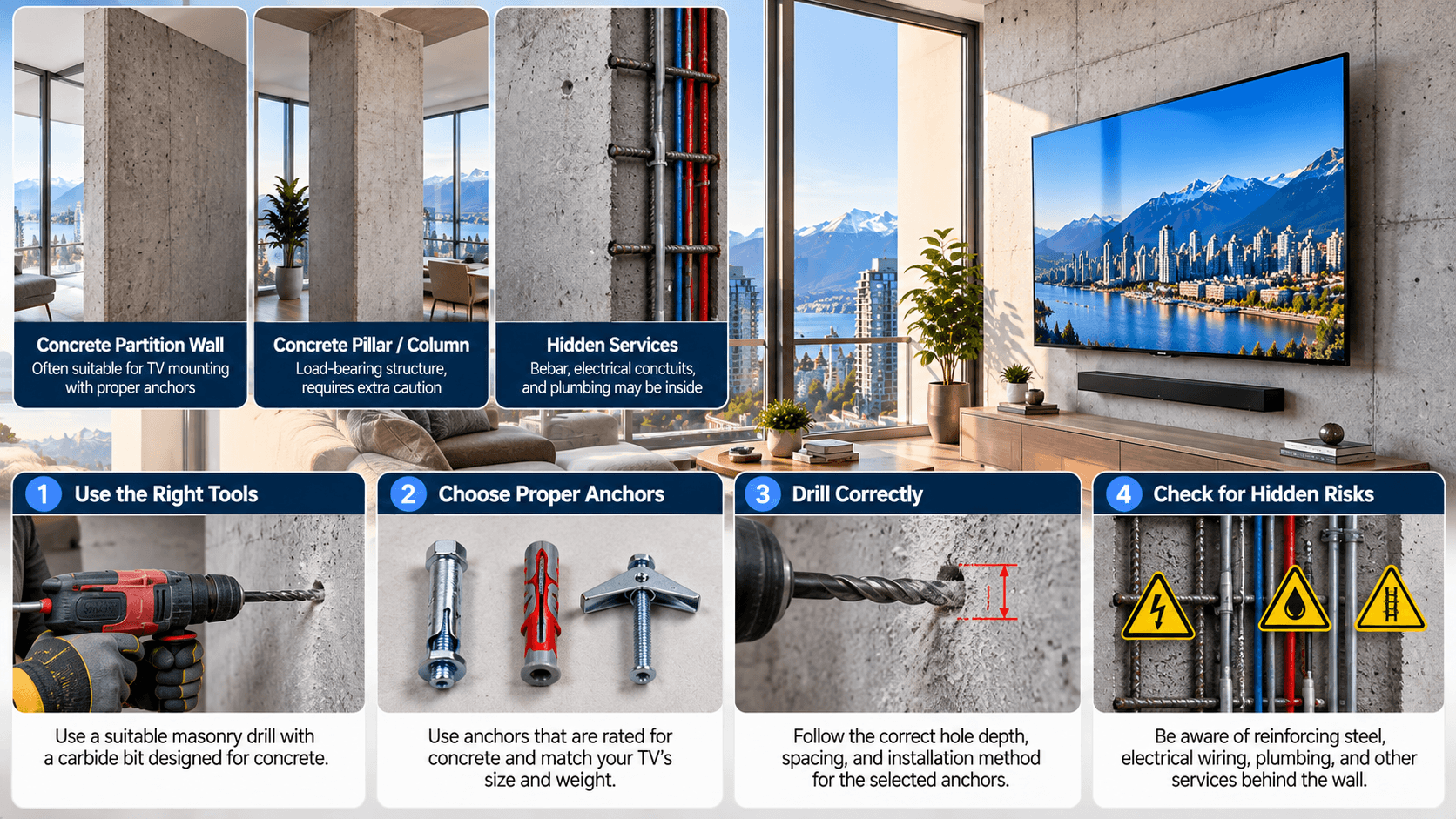
Some Vancouver condos have exposed concrete walls, concrete partitions, or structural concrete pillars. These surfaces can provide strong support for a TV when the mounting system is properly selected and installed.
However, concrete drilling requires different tools and precautions than drywall installation.
A concrete partition may be suitable for mounting a TV, depending on its thickness, condition, and construction. Structural pillars and columns require more caution because they are part of the building's load-bearing system.
Before drilling into concrete, confirm that the location is approved for mounting. Reinforcing steel, electrical conduits, plumbing, and other embedded services may be present behind the surface.
Never assume a concrete wall is safe to drill simply because it looks solid. Structural restrictions and building plans may affect where holes can be made.
Concrete mounting generally requires suitable masonry drilling equipment and anchors rated for the application. The anchor type, hole depth, spacing, and installation method must match the wall material and the loads involved.
Poorly installed anchors can loosen over time or fail to hold the TV securely. Drilling too deeply can also damage hidden services or reinforcement.
If you are mounting a large TV or working near a structural pillar, seek advice from a qualified installer or the building's management before proceeding.
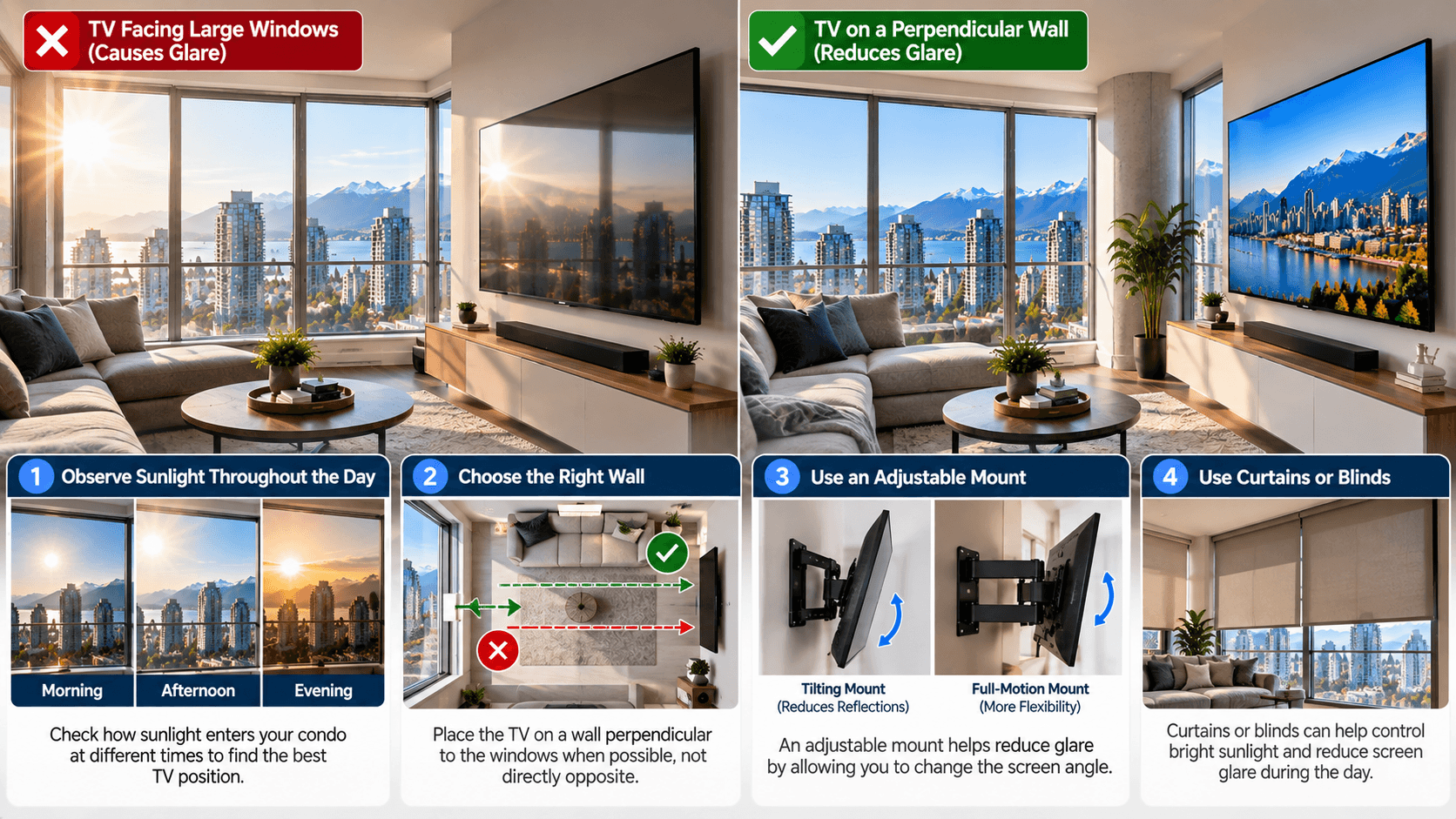
Many Vancouver condos feature large windows that provide natural light and views of the city, mountains, or waterfront. While these windows make a room feel open, they can also create glare on a television screen.
A TV mounted in the wrong location may be difficult to watch during the day, even when the picture quality is excellent.
Before drilling, observe how sunlight enters the room throughout the day. Direct sunlight and reflections from bright windows can make dark scenes difficult to see.
Whenever possible, position the TV so that large windows are not directly opposite the screen. A wall perpendicular to the windows may offer a better viewing experience, depending on the room layout.
Also consider where you normally sit. The TV should be easy to view from your sofa or main seating area without forcing you to turn your neck or look upward for long periods.
A tilting mount can help reduce reflections by allowing small adjustments to the screen angle. A full-motion mount offers more flexibility if you need to reposition the TV for different seating arrangements.
However, an adjustable mount should only be used when the wall and mounting hardware can safely support its load and leverage.
You can also consider curtains or blinds to control sunlight during the brightest hours. Combining good placement with appropriate window coverings can make a noticeable difference to your viewing comfort.
If you rent a condo or live in a strata-managed building, checking the applicable rules is an important part of the installation process.
Even a small mounting project may involve restrictions on drilling, wall modifications, common property, or work that could affect building systems.
Renters should review their tenancy agreement and ask the landlord for written permission before making holes in the walls. Some landlords may allow standard TV mounting, while others may prefer non-invasive alternatives.
It is also helpful to discuss who will repair the wall when the TV is removed. Keeping this agreement in writing can prevent misunderstandings later.
If drilling is not permitted, consider a freestanding TV stand or a suitable floor-standing mount that does not require wall attachments.
Condo owners should check their strata bylaws, rules, and any relevant building requirements before beginning installation.
Ordinary interior wall modifications and work affecting common property may be treated differently. Concrete structures, shared walls, fire-rated assemblies, and concealed building services can require additional care or approval.
Do not assume that owning the unit automatically gives you permission to drill anywhere inside it. If the mounting location is unclear, ask the strata manager or building management for guidance.
Following the correct process helps protect your property, your neighbours, and the building itself.
Space is often limited in Vancouver studio and one-bedroom apartments. A wall-mounted TV can free up valuable floor space and make a small living area feel more organized.
Choosing the right mount depends on the room layout, wall construction, and how you plan to watch television.
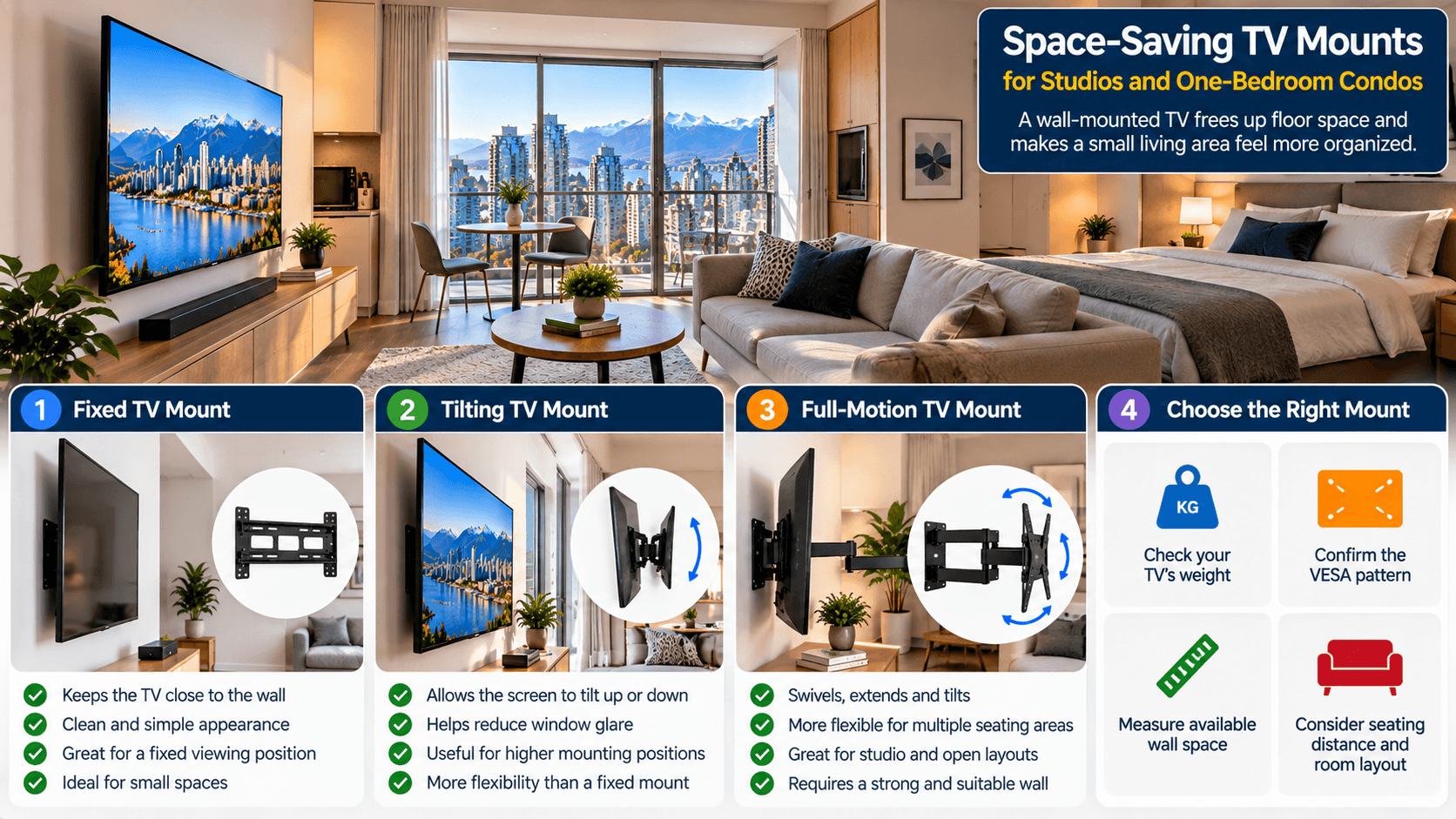
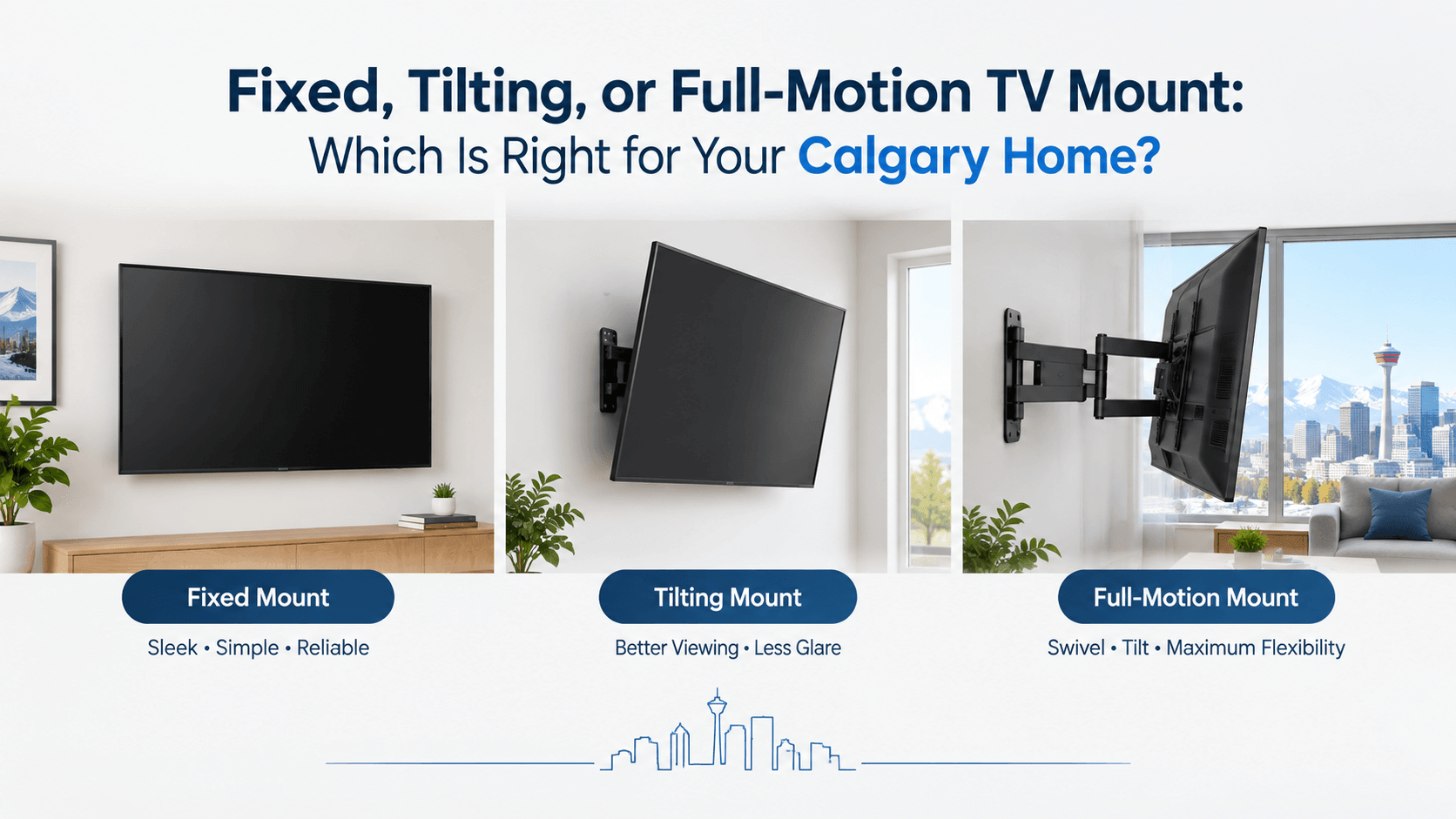
A fixed mount keeps the TV close to the wall and creates a clean, simple appearance. It is often a good option when the screen can face the main seating area without needing frequent adjustment.
Because the TV stays in one position, cable routing and furniture placement should be planned carefully before installation.
A tilting mount allows the screen to angle slightly up or down. This can be useful when the TV needs to be mounted a little higher than ideal or when window reflections are a concern.
It provides more flexibility than a fixed mount without requiring the full range of movement offered by a swivel bracket.
A full-motion mount allows the screen to extend, swivel, and sometimes tilt. It can be useful in studio apartments where the sofa, dining table, and bed may share the same open space.
For example, you might angle the TV toward the sofa during the day and reposition it toward another seating area later.
However, full-motion mounts extend farther from the wall and create additional leverage. They require careful selection and a wall structure that can support the load safely.
Before buying a bracket, check your TV's weight, VESA mounting pattern, and the mount's supported specifications. Also measure the available wall space and the distance between the TV and nearby furniture.
A compact, well-planned installation can improve the room without making it feel crowded.
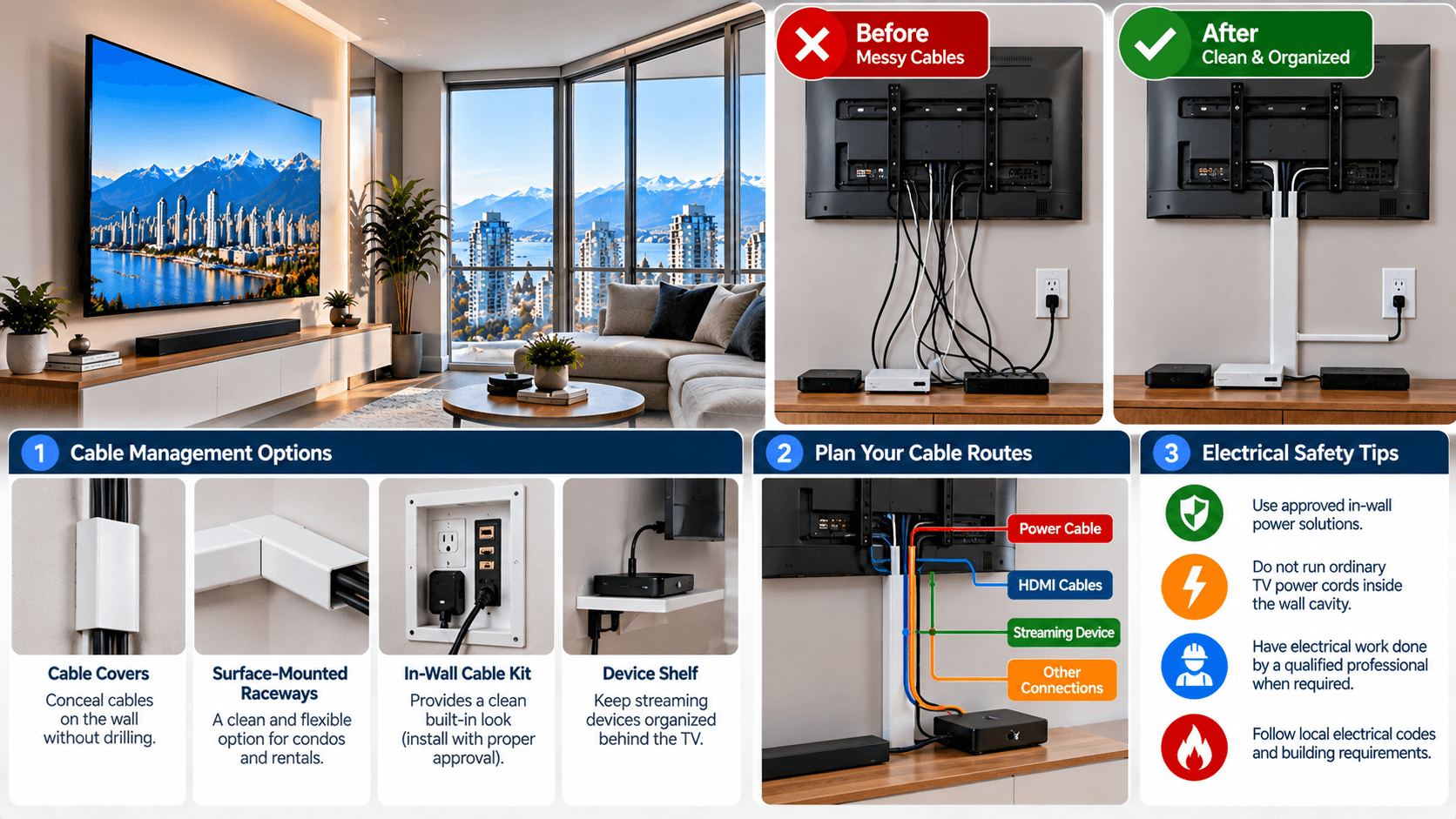
A wall-mounted TV looks best when its cables are neat and organized. Poor cable management can leave wires hanging behind the screen or running across the wall, reducing the clean appearance you want to achieve.
Before installation, decide where the TV's power cable, HDMI cables, streaming devices, and other connections will go.
Cable covers and surface-mounted raceways can help conceal wires without opening the wall. They are especially useful in rental apartments or buildings where cutting into drywall is restricted.
Choose a cable management option that suits the wall finish and allows access when you need to replace or add equipment.
Concealing cables inside a wall can create a cleaner finish, but it requires attention to electrical codes and fire safety. Ordinary TV power cords should not simply be routed through a wall cavity.
Use an approved in-wall power solution installed according to local requirements. If new electrical outlets are needed, have the work completed by a qualified electrical professional where required.
Planning cable routes before mounting the TV can help reduce extra holes, visible wires, and unnecessary installation work.
A successful installation depends on more than choosing an attractive bracket. Small mistakes during planning or installation can lead to damaged walls, uncomfortable viewing, or an unstable TV.
Avoid these common problems:
Taking time to plan the installation can help prevent these problems and protect your TV and property.
Some installations are straightforward, but others require a closer assessment of the wall structure and building restrictions.
Professional help is particularly useful when you have a large TV, steel stud walls, concrete surfaces, a full-motion mount, or an installation location near a structural pillar.
An experienced installer can help identify the wall type, select a suitable bracket, check mounting points, plan cable management, and position the screen for comfortable viewing.
If the installation involves structural concrete, fire-rated assemblies, electrical work, or uncertain building requirements, the appropriate specialist or building authority may also need to be involved.
When comparing TV mounting Vancouver services, ask about experience with high-rise condos, steel stud construction, concrete walls, and the specific mount you intend to use. Confirm that the proposed installation method suits your wall rather than relying on a one-size-fits-all approach.
Mounting a TV in a Vancouver condo or apartment can improve your viewing experience, save space, and give your home a cleaner appearance. However, the right approach depends on the wall construction, TV size, mounting hardware, and building requirements.
Steel studs need suitable support and fasteners. Concrete walls require careful drilling and correctly rated anchors. Large windows may affect screen placement, while rental agreements and strata rules can determine whether drilling is allowed.
By planning the installation before making holes, you can avoid common mistakes and create a setup that suits your space.
If you need help with TV installation in Vancouver, consider working with a qualified professional who understands condo construction and can recommend a safe, practical mounting solution for your home.


Our online price calculator is free and requires no credit card, email, or contact information. Check it out!
Our online price calculator is free and requires no credit card, email, or contact information. Check it out!